PRE-NORWAY
Last March near the end of our big trip, Jim announced he wanted to take another overseas vacation. We’d wrapped up our final European journey, or so we thought, but Jim was having such a great time that he wanted me to plan another. The challenge? We had already checked off most of our travel boxes, except maybe one: Norway. It hadn’t made our cut previously because we’d heard it was expensive and too cold to visit in the off-season, which we preferred.
But we decided, hey, let’s figure it out.
In 1991, my mom planned a huge Norwegian family reunion in Washington State, complete with flag bearers, folk costumes, and a kransekake cake. (I substituted snickerdoodle cookie dough for the traditional recipe since none of us cared for it.)
I’d forever known about my Norwegian ancestry. Grandpa Rudolph Gregerson’s parents immigrated from this “land of steep and jagged fjords, salmon-teeming rivers, glaciers, meadows and mountains.” (Mom also asked me to make a slideshow for the reunion. I plagiarized this line from a Norway travel brochure for its opening. My family still quotes it.)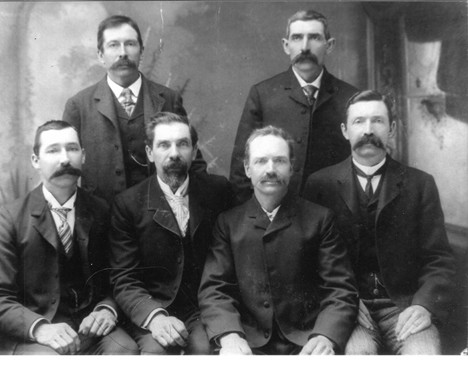
Gregerson brothers come to America
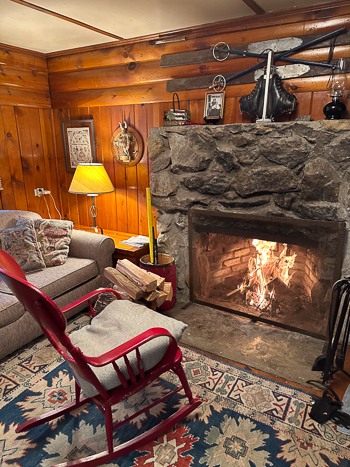
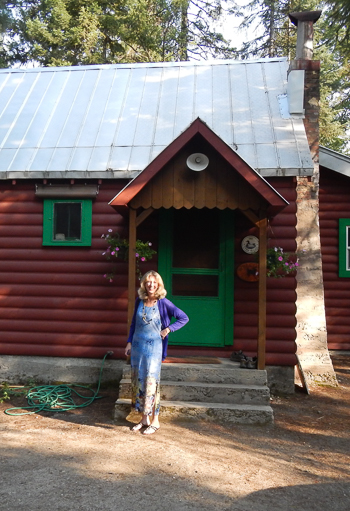
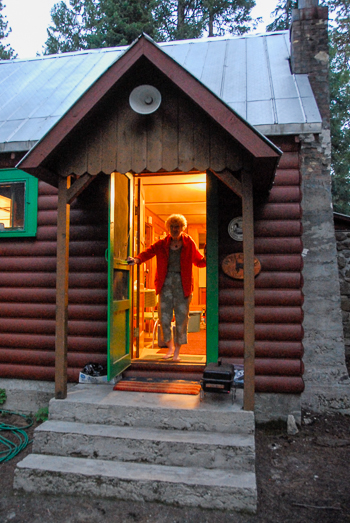
My maternal grandparents maintained a loving presence in my childhood, and that survives in our cabin that Grandpa Rudd built for the family in McCall, Idaho in 1947. Scandinavians founded McCall and must have felt at home with the rugged mountains, crystal waterways, and hard winters of central Idaho. Looking at photos of Norwegian cabins, they bear a striking resemblance to ours in McCall, from the red and green exteriors to the cozy pine interiors to the narrow corner staircases.
Grandpa learned his woodcrafting skills at the knees of his Norwegian father and grandfather, both wood-workers by trade, so the similarity in cabin design makes sense. I inherited and own this cabin today along with my younger sister and brother, Melanie and Andy.
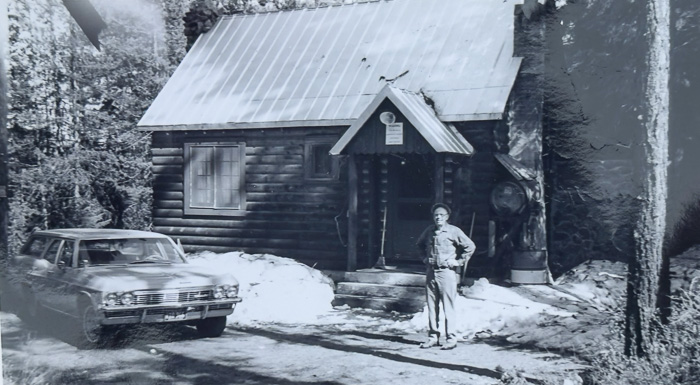
Rudd Gregerson
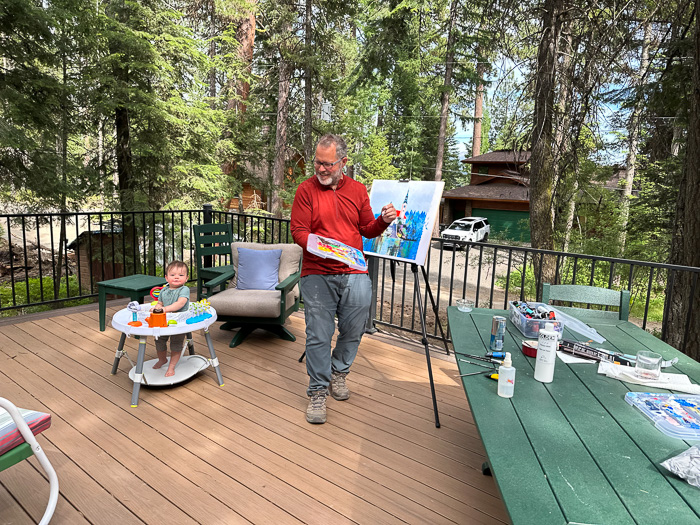
My husband James teaching grandson painting on back deck
QUEENS STOP-OVER
On our way to Norway, we detoured to Queens to visit our newest grandson, the world’s best-natured baby. Our travel began with a series of texts from Delta announcing nearly eight hours of delays, hinting at lack of staffing. With each message we grew more fearful that we’d be cancelled outright. And with each delay, more seats opened up, probably due to transfer concerns at JFK. In the end, Delta bumped us to the front of the plane.
When we booked flights, we didn’t know that we’d get to see our son-in-law’s Peruvian mother, Rosa, in New York, too. Jim met Rosa once before in Seattle, but this would be my first time. Neither Jim nor Rosa spoke each other’s language, but they managed with Google translate and body language. Annie told Rosa that I had studied Spanish so I reviewed my college textbook beforehand which allowed us to speak face-to-face, even if I sounded like a curious four-year-old.
As an early Mother’s Day celebration, we dined at our favorite neighborhood restaurant, Telly Taverna. The staff was lovely and accommodating to us and charmed by our shared baby grandson. I kept speaking Spanish to the waitress by mistake and she started addressing me with it in return. In summary, I spoke Spanish to an English-speaker in a Greek restaurant in Queens while chatting with a Peruvian the night before flying to Norway. We were primed for an international trip.
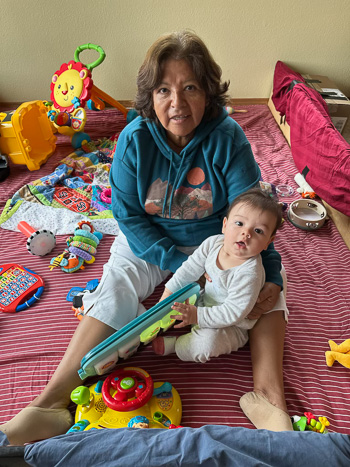
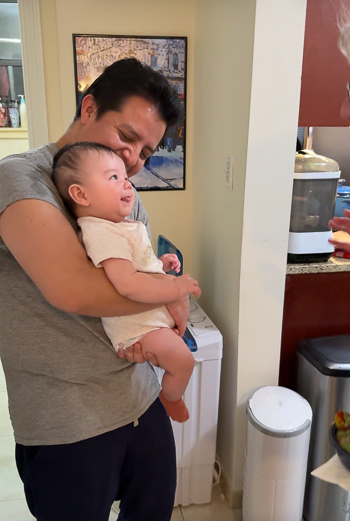
Grandma Rosa from Lima and her son Juan Carlos and our grandson Daniel
MESSY IMMIGRATION
Our flight from JFK went smoothly except for Immigration in Amsterdam. At first I thought it would be a snap after navigating simple machines for scanning our passports and faces, but that was only pre-gaming.
We joined a long line that grew exponentially, snaking over an hour in switchback rows, like Disneyland, Jim said. Except there’s no fun ride at the end, I answered.
At the top and bottom of the hour, staff announced that those with certain upcoming departure times could jump to the fast-pass line. Confused travelers scurried over based on their boarding times instead. Staff ordered them back, roller bags between their knees.
A large fan at the far end of the hall did little to cool the overheated space. Jet-lagged travelers started dropping. One fainted, one vomited. We heard gasps and cries for medics. Still the line moved slower than a Norwegian glacier with too few open immigration stations.
Normally Jim and I sail through immigration in about twenty seconds. Given our age and unblemished travel history, we present as much risk as a butterknife on Norwegian sourdough. But when we finally reached our official, he found enough chill time to shoot the Dutch breeze with a co-worker while his computer pondered how great a threat we posed to Europe.
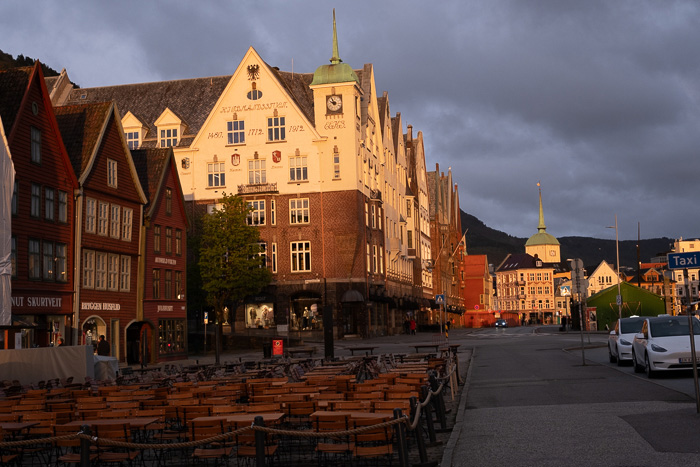
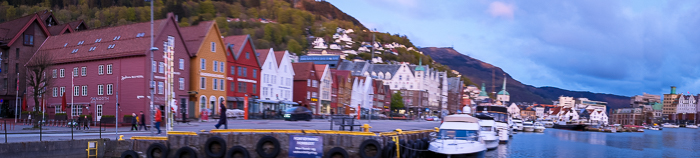
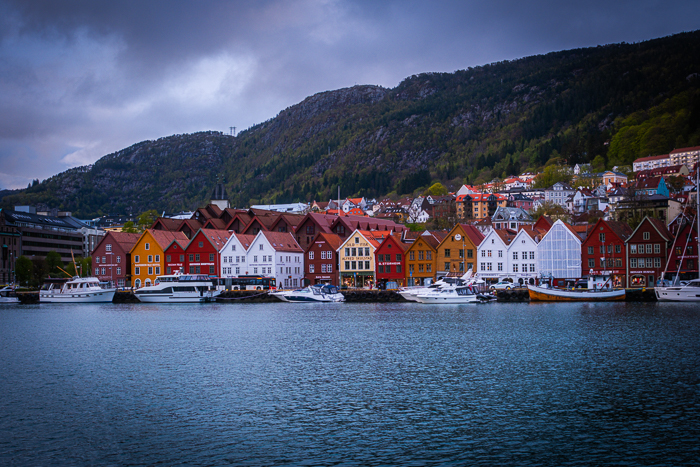
Bergen waterfront
STRIKES IN BERGEN
I got the same feels flying into Bergen as I do into our Portland Airport. Trees, waterways, mountains, green, lush, wet, gorgeous, home.
Annie informed me that I am, in fact, 40% Norwegian, more than I thought. I don’t know how much my homey feeling comes from the resemblance to Oregon or how much relates to my genealogical heritage. But upon arrival, a memory surfaced in my brain. At our Norwegian family reunion, I’d asked my grandpa’s brother, my dear Uncle Tom, a question.
“Would you ever want to visit Norway?
“Naw. If it was so great, why did they all want to leave?”
Like everything else, lodging is spendy in Norway. I found a less eye-popping rate during this shoulder season at a nice-enough, slightly funky hotel. Two days earlier, the hotel e-mailed me, asking if I wanted to upgrade to a full suite for $32 more per night. Jim gave the thumbs up. Only afterwards did I see that our suite would be on the top floor with slanted ceilings and no regular windows—just a skylight curved over our bed. Neither of us suffers from claustrophobia but I wondered if this might plant the seeds.
A sign on our hotel door announced a hotel and restaurant strike in town. I was grateful I’d not known about this beforehand or would have worried about camping on the soggy streets of Bergen.
As instructed, I pushed a call button and a hotel guy said don’t worry, not all hotels and restaurants were closed. Their sister hotel around the corner would take us in and it was very nice, nicer than our original one, he promised. Even better, they honored our original rate. Since I had upgraded to the skylight claustrophobia suite, the new hotel handed us plastic keys to their largest suite on the top floor, one with both skylights and actual windows.
We continually pass hotel and restaurant strikers around town. They sport yellow vests like construction workers and huddle on lawn chairs outside businesses smoking and playing on their phones. Since they completely ignore passersby, we fear no heckling for crossing pickets lines. The strikers pack treats and beverages to fuel their squatting, looking less like activists than bored acquaintances at poorly planned tail-gate parties.
Later we heard that these strikes always end the same way: the government caves to all demands and reimburses the hotels and workers for all lost income and back wages. Suddenly everything made sense.
BERGEN HISTORY
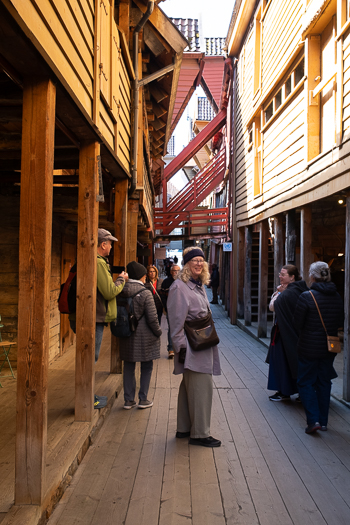
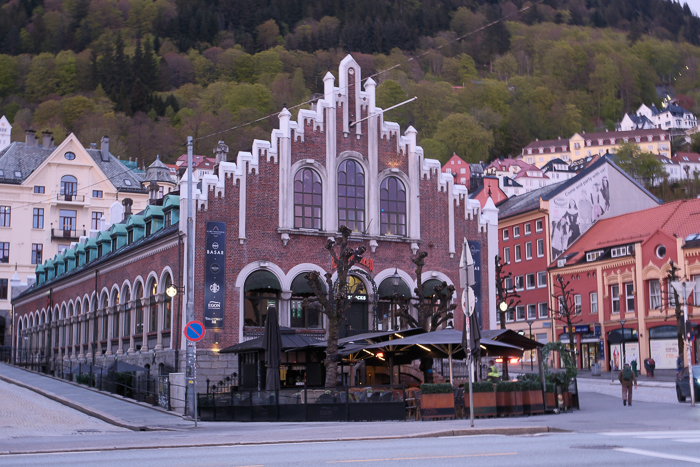
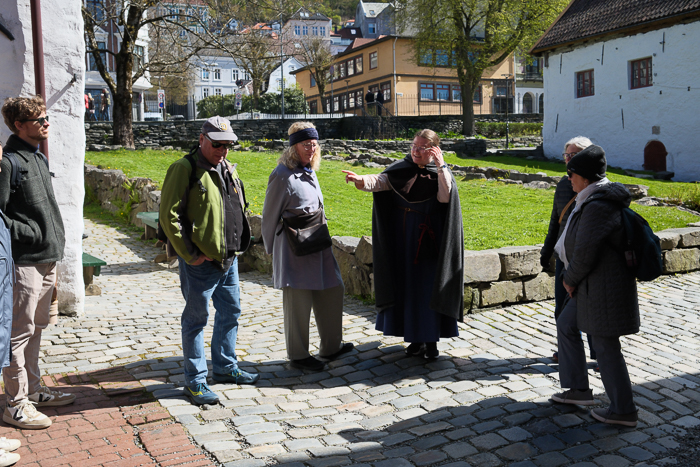
In old town Bergen, we took a walking tour with the Bryggens Museum. Our excellent guide, Ine, learned English from working as an au pair in Australia. Before starting her tour, she asked where we all came from. When nobody answered German, Ine chuckled and said she could now speak more openly. She explained that Bergen history could be boiled down to three points: fish, fire, and Germans. This translates into cod, the repeated burning of wooden Bergen, and historical oppression by Germans. Today, Bergeners speak fondly of the cod.
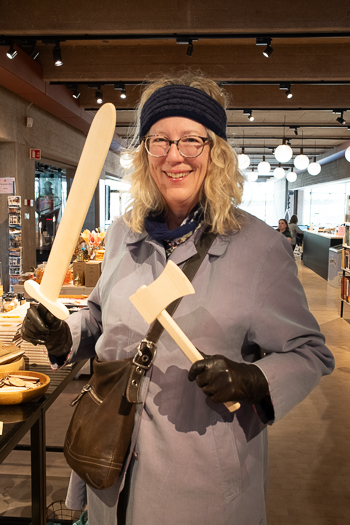
Ine described the importance of wood to the culture. During the Middle Ages, Bergen’s people wrote messages and recorded transactions using knives and pieces of wood, a cheap and plentiful substance. They carved their Runic alphabet into sticks, appropriately called “rune sticks.” For construction, they employed wood and little else, anchoring walls in Lincoln Log-like fashion.
Ine explained how wood is meant to be used and will go bad if it’s not. Jim and I wondered if our wooden cabin in McCall has survived 79 years because it has never missed a summer without the family loving up the place.
WET LIKE HOME
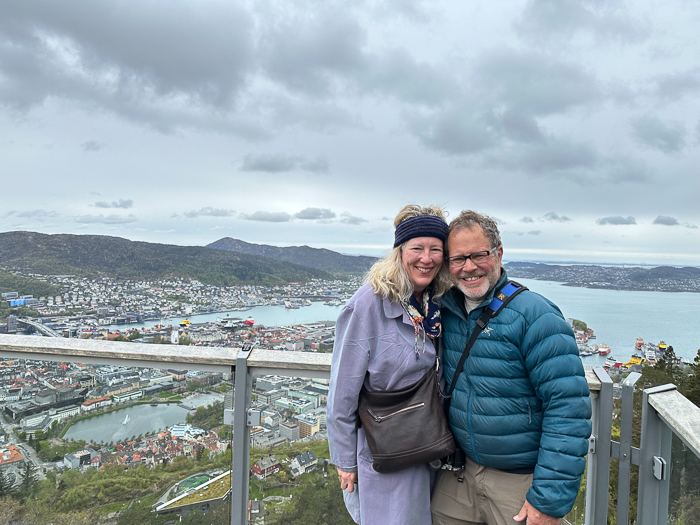
Bergen is more rainy, damp, and cool than snowy and has a short growing season. It subsists on four hours of daylight in the winter, but in the summer, that flips. I dozed a hard ten hours our first night in Bergen but had trouble falling asleep the second night. I gave up trying and right now at 11:36 PM, I type while nibbling Mint Milano cookies. Through our parted curtains, twilight lingers.
We hit Bergen on a decent weather week, this city known for 239 rainy days per year. In Bergen, they like to say, “There is no bad weather. Only bad clothes.” I’ve heard this applied to the Pacific Northwest, as well.
SLOW TRAVEL
Everyone has their method for traveling. We prefer staying put longer and moving from city to city less. In fact, Jim and I find transfer days unsettling enough that don’t consider them “real” days. We count only ones where our suitcases don’t leave the luggage rack. By Southworth calculations, that means four whole days in Bergen, four in the fjords, and five in Oslo. Beyond that, I’d have to do the math.
We care more about marinating in a place than checking off boxes. But anything involving art or history, we’re there, and we love off-the-wall sites. And if by evening, I have time yet to read a book, that’s a particularly good day.
In familiar places, we might rent an apartment and play like we’re locals, though this becomes less possible with cities enacting limitations on short-term rentals. At hotels, we still manage some pretending by purchasing snacks at the local market. Jim’s need for Red Bull requires de-coding foreign grocery scanners. In Bergen, we discovered the hard way that you need a second receipt simply to exit the store.
Staying in place longer also allows greater flexibility. Sometimes a site will randomly close and we switch with another day. We gauge weather and crowds and juggle our plans accordingly. In Bergen, we adjust when the skies open up or cruise ships inject their thousands onto the streets.
MY PEOPLE
Locals here have been kind, warm, and helpful. Tonight at dinner our waitress greeted us in Norwegian. She seemed surprised when we answered in English.
“I’m part Norwegian,” I said.
“I can see it,” she said, a glint in her eye.
Jim tells me that he gets addressed in Norwegian while with me but not when he runs around town alone. We probably confuse locals by not traveling with a tour group, as do most tourists. We just bumble about Bergen, recklessly unattended.
Bergen Tour
LET THE RIVER RUN
Our catamaran ride from Bergen to Balestrand stirs up more deja vu for me. At times I mentally transport to an Amtrak train tracing the Columbia River. Or a pontoon boat on Payette Lake. Or Going to the Sun Road at Glacier National Park. I have a beautiful mind these four catamaran hours.
My great-grandfather Carl and his brothers left Norway in the 1880s for a better life in the United States. They boarded a ship for their own “new Jerusalem.” They waited in immigration lines in New York City before moving onto Wisconsin, where they opened a wagon-making business. Wooden wagons, of course.
Riding the catamaran, I do little besides soak in the view of the fjords. Carly Simon accompanies me, belting “Let the River Run.” https://www.youtube.com/watch?v=cv-0mmVnxPA
Let the river run
Let all the dreamers wake the nation
Come, the New Jerusalem
Silver cities rise
The morning lights the streets that lead them
And sirens call them on with a song
It's asking for the taking
Trembling, shaking
Oh, my heart is aching
We're coming to the edge
Running on the water
Coming through the fog
Your sons and daughters
I can only imagine the mix of exhilaration and heartbreak as my great-grandparents left their homeland behind for the United States. As far as I know, they never got to return to Norway. Here I am today.
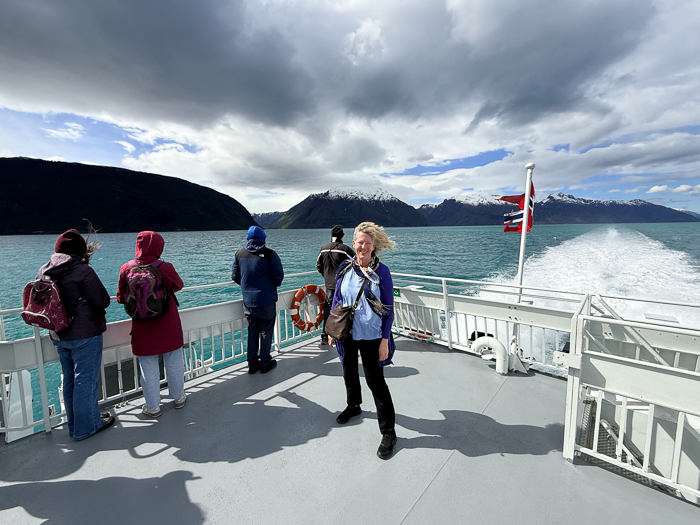

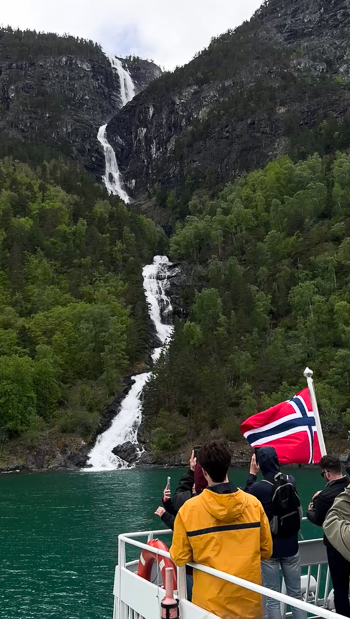
Our Balestrand Hotel
THE HYTTE
Our village of Balestrand, far-flung into the fjords, operates a museum dedicated to the history of travel and tourism. It displays artifacts ranging from camping (big in the 1970s) to white tablecloth dining in our Kviknes Hotel (built in 1890).
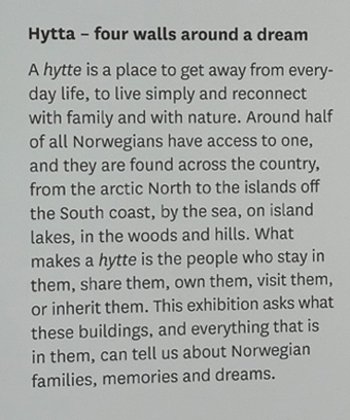
Currently the museum runs an exhibit on the tradition and importance of family cabins in Norway, or “hytte”, as they call them. One of the greatest hardships for Norwegians during COVID was loss of hytte time. Culturally, these cabins provide a means to get away, to reconnect with family and nature. Most Norwegians either own a cabin or have a close friend or relative that will loan you theirs. What matters is having access to one.
A hytte is where you learned to swim, or where grandpa taught you to fish. Where you first brought your husband or wife to help explain who you were. Or where you rebuilt the back deck with your younger siblings and their spouses in 2024.
Over the decades, a hytte collects memories of creaking floorboards, ratted dolls, incomplete puzzles, beach novels, used coloring books, expired spices, and Grandma’s sun hat. It hurts to winnow out such treasures since they’ve become part of the very fabric of the place, so you do so carefully, hanging onto what you can.
A hytte means the generational sharing of space over time, activities, meals, holidays, and play with those you love. Basically, it’s about family. And according to the museum description, “you get to remain part of one as long as the siblings stay together and stay friends.” I am grateful for my siblings-friends and our shared hytte in Idaho.
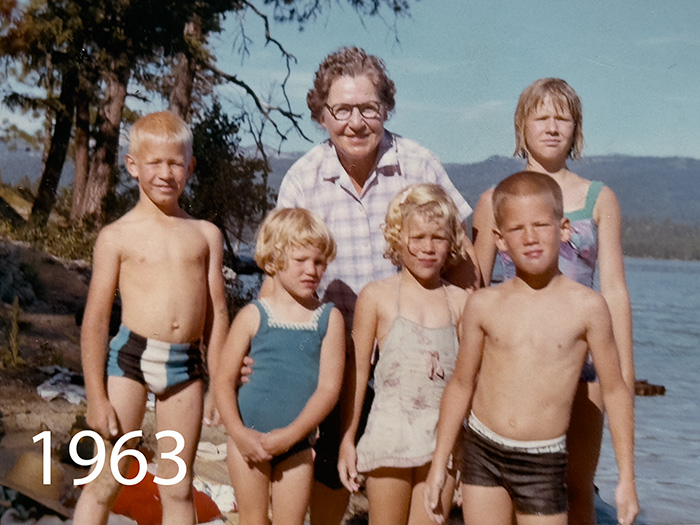
Margaret Gregerson with 5 grandkids in McCall. I'm the youngest with siblings and cousins
My mom, Ruth Gregerson Tyler
FAIRYTALE BALESTRAND
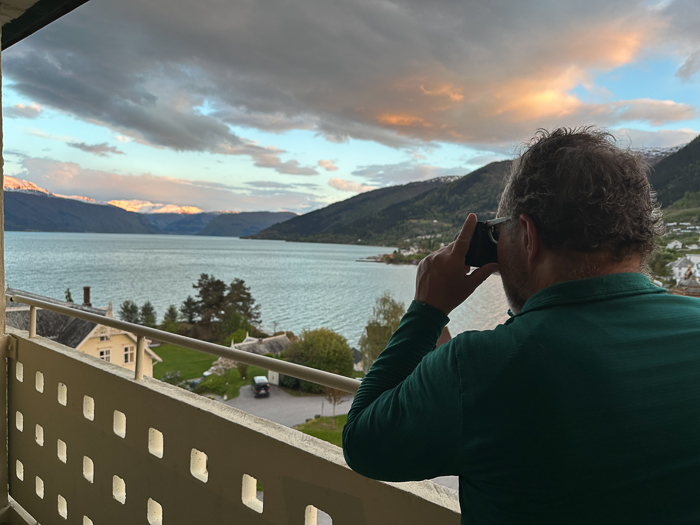
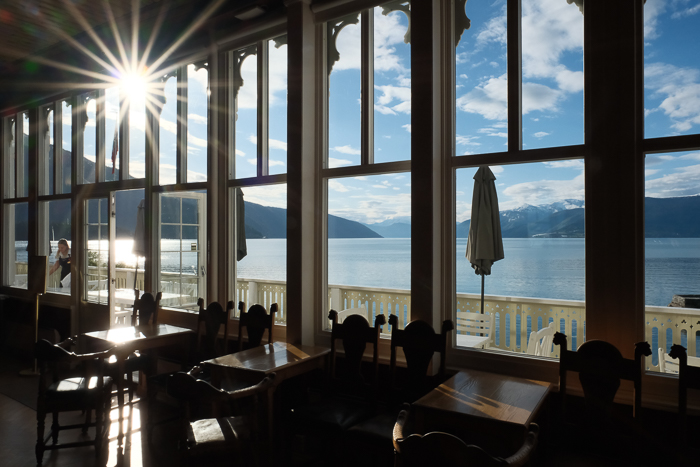
The setting of Balestrand staggers such that I find it hard to find the right words to serve it justice, even with a thesaurus. I’ve never stayed in a hotel with such breathtaking views in every direction. As for Balestrand itself, its St Olof’s Church inspired Disney animators for the movie Frozen.
I woke briefly at 4 AM today as the morning sun filtered over the fjord. I can only imagine the winters here: cold, dark, isolated, and too-quiet. This is why we visit in May.
RUSS
In Bergen, we noticed groups of teenagers wearing red and blue overalls, handing out business cards like rock stars to excitable grade school children. I asked some of them about it and they explained they were graduating high school soon and this was a part of their celebration. Children collect their cards— like Pokemon, the girls said, recalling the fun they had doing so as kids.
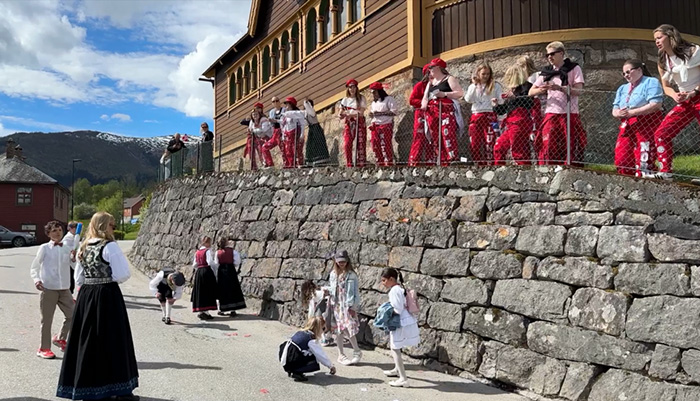
I wanted to find more about this Russefeiring, or Russ, as they call it. For three weeks, upcoming grads party-hard in overalls of colors according to their focus of study, mainly red. They decorate their own overalls and sign each other’s, wearing them daily without a wash until Constitution Day. They drink excessively and play pranks, often with music blasting from spray-painted buses and vans. The festivities culminate the night before Constitution Day. The following morning, hung-over students take their final exams. Russ parents mostly overlook this misbehavior since they once did it all themselves.
We find a handful of teens running around Balestrand in their red overalls. I imagine there’s only so much serious partying to be had in such a small town. And Balestrand’s high school is private, Lutheran, and mainly occupied by boarders from hours away.
CONSTITUTION DAY
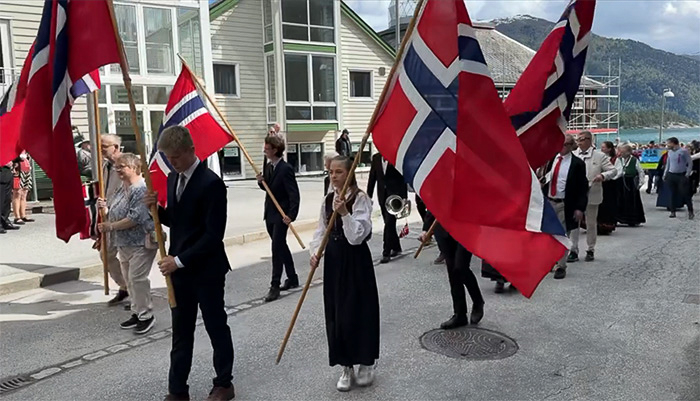
Today marks Norway’s version of our 4th of July, honoring its independence from Sweden in 1814. Thus began Norway’s autonomy after centuries of rule by Denmark, Sweden, or Germany.
Not so long ago, Norway ranked as one of the poorest countries in Europe. Today it lands among the richest, thanks to the oil off its extensive coastline. It repeatedly declines membership in the European Union because it doesn’t want to disrupt or share its flow of oil wealth. Norway drills at will and harvests whales according to its own mores and practices. (We took a pass on the whale steak in Bergen.)
We read about Balestrand’s Constitution Day and how citizens welcome tourists to participate. The parade assembled near our hotel and we found ourselves drawn to the bubbly teenagers in traditional bunad dresses. We chatted with these Lutheran boarding school students who wanted to know how we’d learned about Balestrand, a place where Rick Steves apparently remains an enigma.
I asked the students how often they got to go home. Weekends or holidays, they answered. What did they like about the school? The people, the mountain trails, the good teachers, and the art classes.
Jim asked if they’d ever been to the United States. No, but they all wanted to go.
Where? “New York, Las Vegas, Arizona, Texas, and Ohio.”
“Ohio?” I clarified.
“Yes, we’ve heard it looks like Norway.”
I had my camera out and one of the students suggested we snap a photo with them. We happily agreed. Two of their blond, blue-eyed male classmates approached and they introduced us to them by name and we got more group photos, this time taken by their biology teacher who offered his services as photographer.
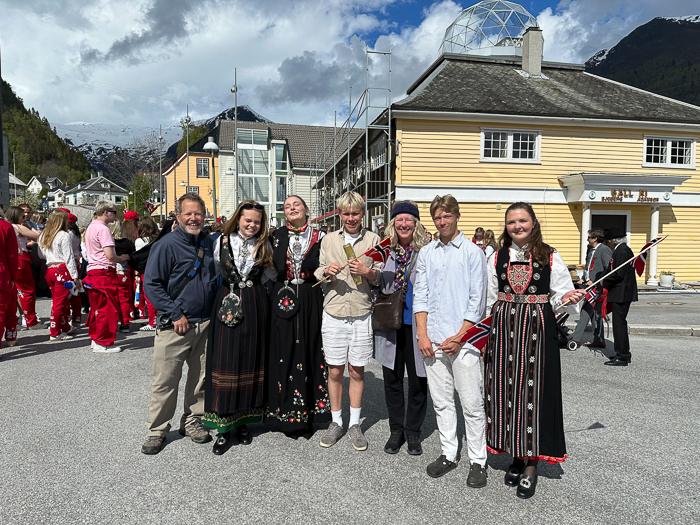
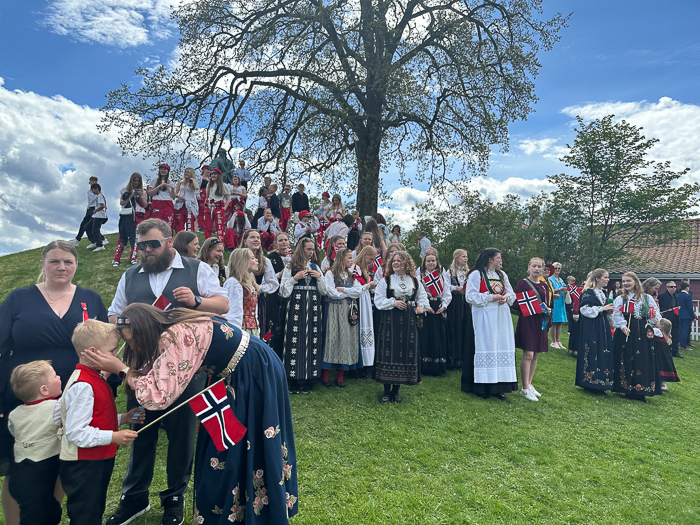
We joined the parade to the Viking burial knoll where an earnest town official and the high school student body president delivered speeches. We didn’t understand a word from either but the adorable blond, blue-eyed, red-pantsed boy garnered a few laughs.
The local choir, middling at best, prepared to perform the Norwegian National Anthem for live broadcast across the country. Jim noticed townspeople eating ice cream cones and ran off to buy one. Turns out they were free and he brought me back one, too, after somehow convincing the non-English-speaking kid keeper-of-cones that he required a second one for his wife.
The stronger vocalists in town bolstered the choir while the rest of us rose to our feet for the singing of the national anthem. I neglected my dripping cone during this reverent moment, not wanting the camera to catch any licking as it panned the crowd.
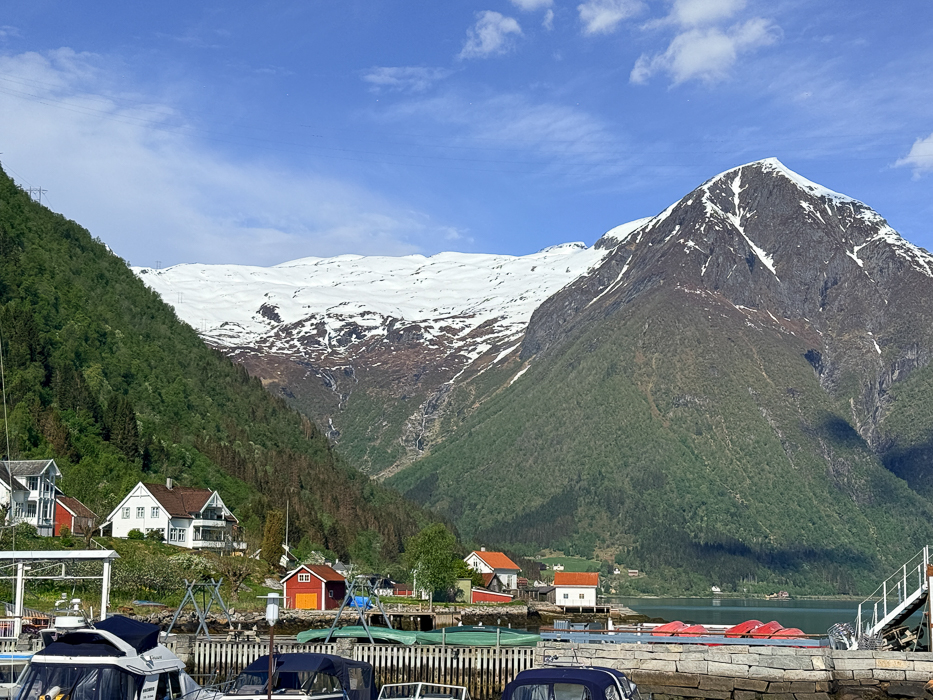
NORWAY IN A NUTSHELL
In 1909, Norway connected seaside Bergen to inland Oslo with a 300-mile long railroad line. The train crossed mountains the same latitude as Alaska using hundreds of bridges and tunnels and miles of snow sheds. Far below this rail line flowed a perfect upside-down U-shaped fjord, as if designed for tourists. In 1982, tour operators organized a transportation bypass from the main rail line down to the water, providing tourists an easy opportunity to experience Norway’s fjords in a single day. And thus began “Norway in a Nutshell.”
The vast majority of tourists do the Nutshell this way. Our detour to Balestrand took us deeper up the inlet, but we covered most of the Nutshell route as well, including the scenic train which connects the fjords to the main rail line. Operators call this train “Flamsbana,” and they have a sense of fun running it.
Halfway through the Flamsbana route, the conductor announces a five-minute stop at the thundering Kjosfossen waterfalls. Everyone obediently files out for a look. Moments later, something or someone hijacks the intercom. Bewitching music plays. From a crumbling stone house next to the waterfalls, a maiden emerges. Styled in a baggy red dress with scraggly blonde hair, she commences her hypnotic dance.
Meet “Huldra” of Norwegian folklore. She lives behind the falls and entices men into the depths of the woods through her song and dance, like the siren from The Odyssey or that Jason and the Argonauts movie I loved in fifth grade.
On today’s Nutshell, Huldra sways to her eerie anthem, flitting about and descending and resurfacing behind the stone house in ways suggesting more than one Huldra. She also looks suspiciously like a dude in a blonde wig. (Later I learned that the Huldras come from the Oslo Ballet.)
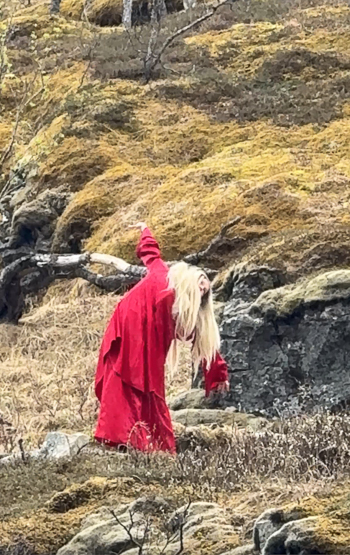
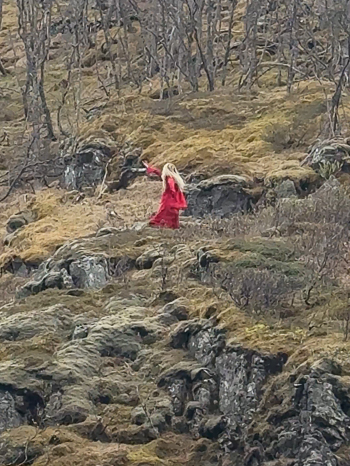
Huldra at the train stop
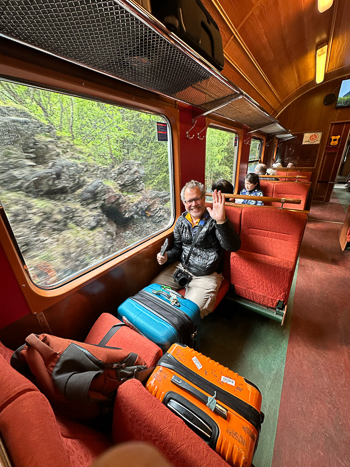
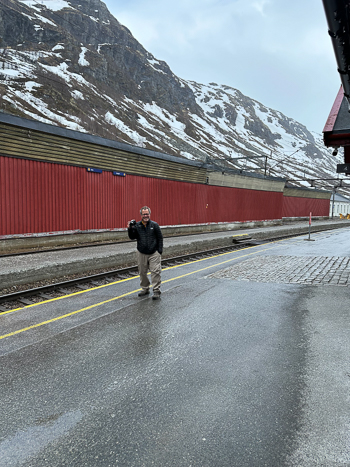
Huldra drops from sight one final time and the music cuts. Train conductors blow their whistles and we re-board, enchanted, scratching our heads.
What fresh trippiness was that?
LANGUAGE
To my ears, Norway stands with England and The Netherlands as best European English speakers. Children gain fluency in grade school.
In most countries we visit, I learn at least a few polite words in the native tongue as a sign of respect. But the unpretentious Norwegians value a warm hello more than butchered attempts at their language.
English proficiency means everyone can watch un-dubbed American movies and TV shows and music of all stripes. In the dimming light of 10 PM Oslo, we drag our bags over cobblestones from the train station to our hotel. We pass a bar and through its propped door, a lounge singer roars the American female disco anthem of 1978.
“I will survive,” he declares.
LINDA RICHMAN PEACE TALKS
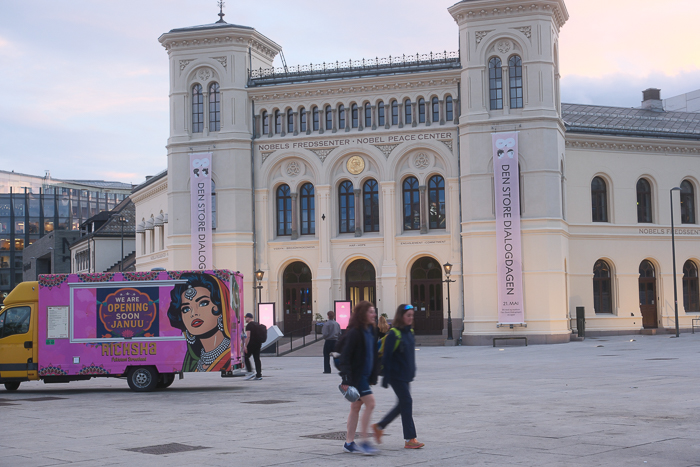
Oslo is clean, efficient, user-friendly and filled with helpful people, including at its Nobel Peace Center. We didn’t know what to expect at this site, one surprisingly compact, unassuming, and more about interpretation than exhibition. Our visit happened to fall on “World Day for Cultural Diversity for Dialogue and Development” and they honored the occasion with coffee-talk.
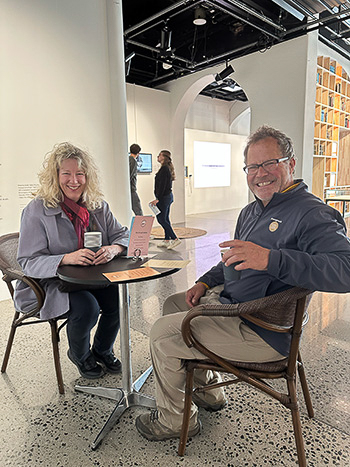
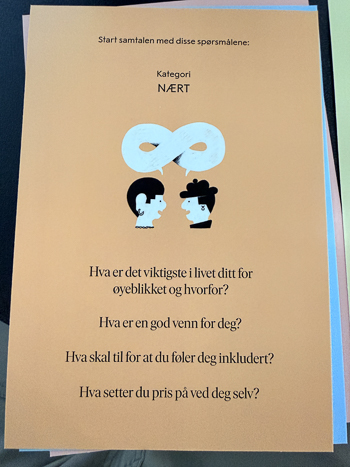
Scattered throughout its main floor, staff set up tables for two with stacks of paper cups and lists of questions. Jim warned the director that after 44 years of marriage, we probably could predict each other’s answers, but she assured him that it didn’t matter if the couples were close or strangers. The goal was to demonstrate the power of dialogue—that if people talk, they have fewer conflicts, both great and small.
The director pumped simple black coffee from her thermos. Jim translated some of the prompts with his phone. “What is most important to you?” “What superpower would you choose?” We dove in with the coffee and the questions.
The director returned to check on our progress. Jim suggested that she probably had advanced degrees and got to serve as a barista today. Yes to all that, she laughed, happy to have us participating.
STAVE CHURCHES
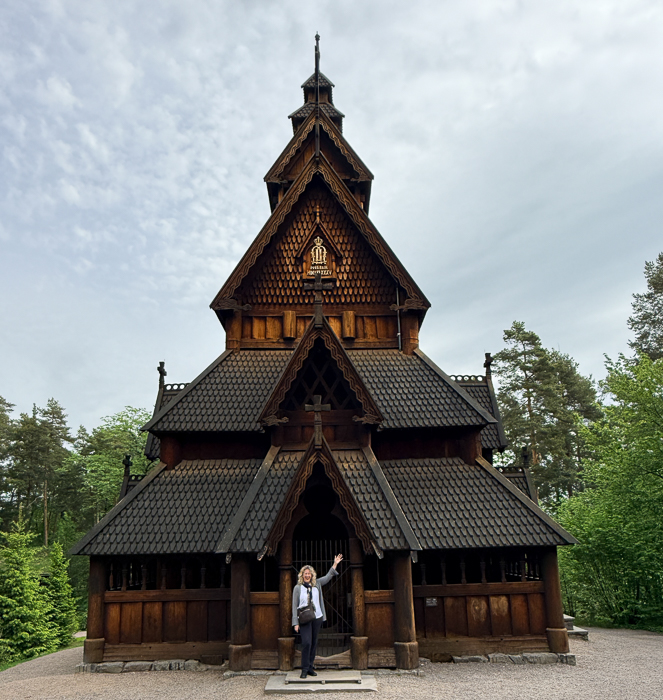
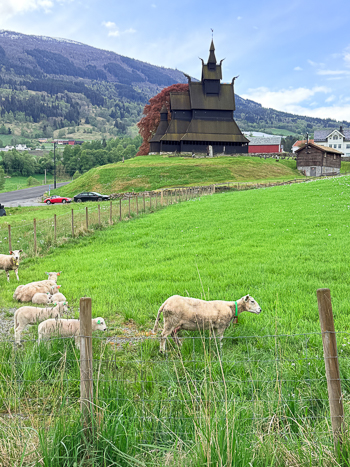
People recognize Norway for its stave churches, these ancient structures of peculiar, layered shape. Some see Japanese pagodas when they look at them. Others, upside-down Viking boats. (Vikings frequently sought shelter under their over-turned boats so the style may be no coincidence.)
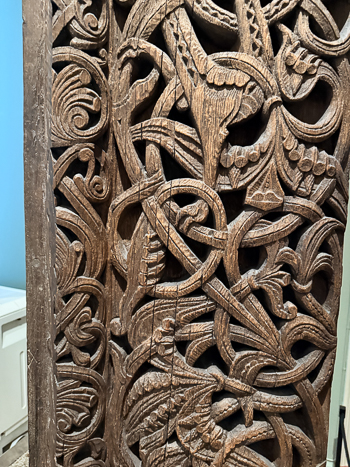
What’s crazy is that staves are made of wood—you know, that material which easily burns, decays, wears, molds, warps, and provides meals for termites? Walk into a stave and you can still smell the wood, like entering one of those mini hope chests that a Salem furniture store used to gift senior high school girls.
From roughly 800-1100 AD, master woodcrafters sealed the wood of their Viking boats with a special concoction of hot pine tar. The tar effectively locked out moisture, and termites hated it. In 1130 AD, Norwegians built their first stave church using the same tar paste treatment. The gooey stuff requires regular reapplication and conservationists still apply the original recipe today.
During the Middle Ages, Norway had about 2,000 stave churches. Today, only 28 remain. A bunch rotted and collapsed during the Black Death (bubonic plague) of 1349 when people could scarcely stay alive, much less maintain a church.
In 1851, the government ordered that all churches provide sufficient space to accommodate their local population. Parishes that couldn’t afford to purchase additional land had to destroy their stave churches and rebuild larger places of worship.
Since then, the Norwegian government had a stave epiphany and now designates them as national treasures, shifting from demanding their demolition to ordering their preservation.
NORWEGIAN RESISTANCE
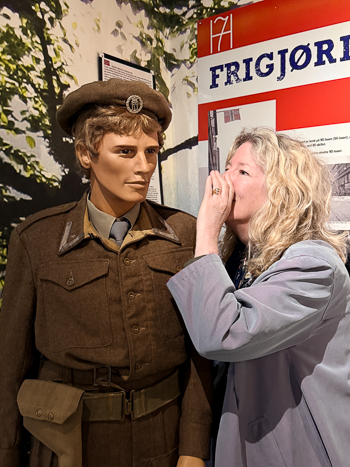
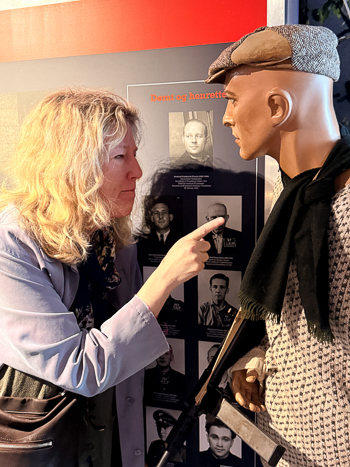
Prior to World War II, Norway clung to neutrality before having its mind—and minimal defenses—blown by Nazi invasion. The Germans, in turn, were surprised and frustrated that the Norwegians didn’t automatically capitulate. Hitler found Norwegians even more master-racey than Germans, though culturally inferior. He expected another cakewalk, like Austria. But the Germans failed to consider that Norwegians are not Austrians.
Still, the Norwegians had some catching up to do, their early resistance efforts sloppy, at best. But they soon adapted, emerging as model resistors against the Third Reich.
The Germans believed Allied propaganda that the European land invasion would occur along the Norwegian coast, not France. In response, Hitler stationed 400,000 German troops in Norway. This, of course, tied up a good amount of his evil-doing energies.
Though occupied, Norway assisted the Allies however it could. Norwegian merchant marines distributed supplies. Young men snuck through Sweden to England to join British fighters. Resistors sabotaged Germans ships, eavesdropped, passed along information about troop movements, and had Kirk Douglas bomb a heavy-water plant in “The Heroes of Telemark.”
Norwegians treated Germans with hostility for years after the war. Into the 1950s, parents would tell their children to shun German classmates, no matter their family’s military participation. Today Germans merely irritate Norwegians by clogging up their summer highways with camper vans.
Norwegians remain proud of their efforts in WWII, as they should. Expecting Norway to hold back Germany would be like expecting Oregon’s National Guard to fend off Hitler. Simply put, Norway did the best they possibly could with the resources they had.
At the time of Germany’s invasion, France had a population 14 times that of Norway, with 5 million military forces compared to Norway’s 55,000. Norwegians love to point out that they still managed to last longer against Germany than France did.
THE HUMANISTS
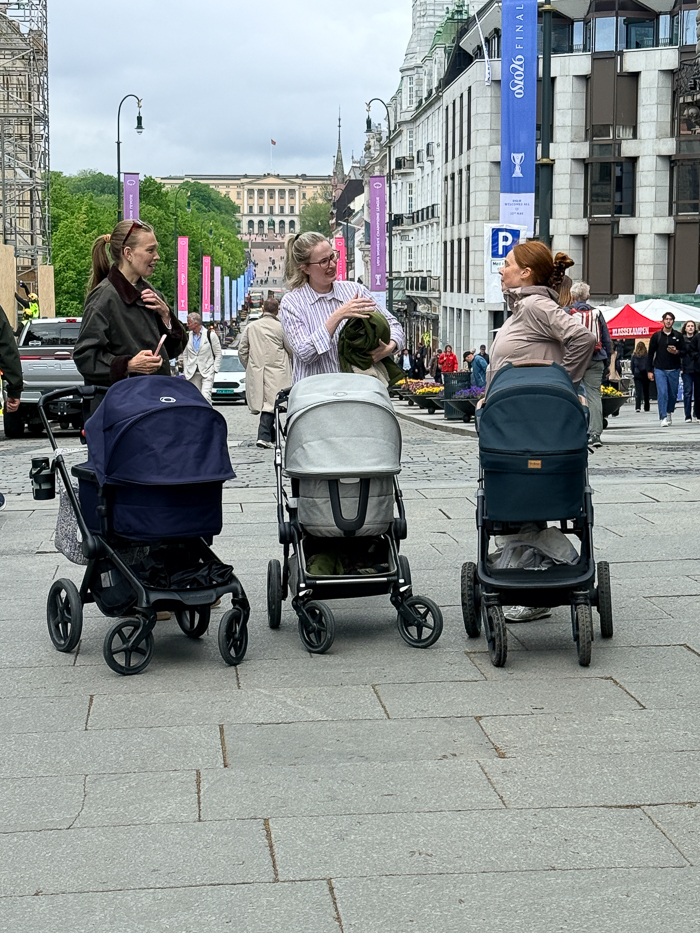
On our last night in Norway, we met for dinner with the delightful daughter and son-in-law of our longtime friends, Doug and Penny. Morgan and Sean live and work in Oslo and we loved catching up with them and learning what it’s like for a couple of Americans to make their home here.
We had trouble finding an open restaurant because the country was recognizing yet another holiday. In just over two weeks, we’ve observed Constitution Day, Ascension Day, and now “The Second Day After Pentecost.”
Given their largely secular society, I found it fascinating that Norwegians honor so many holy days. Morgan laughed and explained that the country looks for any opportunity to take a holiday, particularly during these heady days of May sunlight. Despite the majority of Norwegians claiming Lutheran affiliation, they have pocket-sized church attendance—something else in common with the Pacific Northwest.
Sean told us that while fewer Norwegians participate in Christian baptism or confirmation, an increasing number engage in parallel rites of passage through humanist groups.
From Oslo’s Humanist Association website:
In Norway, what are commonly referred to as "Humanist baptisms" are known as Humanist naming ceremonies. They serve as a secular, non-religious alternative to traditional church christenings. Organized by the Norwegian Humanist Association these ceremonies celebrate a child’s birth and welcome them into society using humanist values rather than religious elements.
Secular naming ceremonies welcome a child into the world and the community. As an official member, you can honor your baby’s arrival through a ceremony at City Hall to ‘celebrate the child's arrival, human rights, and the value of childhood.’
And in place of church confirmation, you can invite your friends and family to join you in a Humanist ceremony recognizing your teen’s coming of age.
Secular confirmation is an immensely popular rite of passage for 14- to 15-year-olds in Norway. In preparation, teenagers take a course over several months discussing ethics, philosophy, identity, humanism, and critical thinking.
Given a spiritual void, people will find ways to fill it.
HOME ADDRESS
In all my years of travel, I’ve never experienced a personal hiccup at immigration, but there’s a first time for everything at Oslo Airport. At check-in, my passport scan delivered these scary words in red: DO NOT BOARD.
British Airways’ computer system pitched a fit about my Oregon address. You know, the one I’ve had since 1989. The agent struggled, many minutes passed, I sweated. She sighed and repeatedly asked, “You’re just going home, right?”
The line behind us ballooned and I didn’t dare engage any of their faces. Eventually the agent took my photograph and phoned the big boss who overrode my denied status. That fact that I was headed home somehow made the difference; I’m not sure I’d have boarded otherwise. Jim says he would have visited me in Norway.
WHY WE TRAVEL AUTONOMOUSLY
Finally at our gate in Oslo’s airport, two strangers took seats inches behind me. They struck up polite conversation. The man appeared in his 60s and sounded American. The woman was slightly younger and British. I couldn’t help but overhear every word.
Brit lady: “Is this your first time in Europe?”
American dude: “I came once in sixth grade. I’m here now with my girlfriend and her kids. Her cousin invited us on this five-day bus trip.”
Brit: “What did you think of Norway? So beautiful, right?”
Dude: “Oh, yes, very pretty.”
Brit: “Where did you go?”
Dude: “I’m not really sure. We saw some mountains. We went on a ferry somewhere for a couple of hours.”
"I dunno,” Dude continued, laughing. “Mostly I just followed the guide around.”
Brit: (No words)